I’m reviving my dreams of publishing good books to readers in Uganda, and Africa, at very affordable rates, so this post is to introduce my new venture, Ododo Press. After nearly two months of building the site, I should blow trumpets and march in the streets with flags waving to announce its arrival, but well, it’s just this little blog post doing the job.
TL;DR. I’ll publish speculative fiction, with a particular focus on solarpunk, AfroFuturism, AfricanFuturism, and all other kinds of IndeginousFuturisms, along with folk tales and non-fiction about arts and culture. I’ll primarily focus on ebooks and audiobooks, for these, compared to print, can be cheaply produced and thus distributed at very low prices. I’m still investigating payment methods that use mobile money, and so anyone anywhere on the continent can easily buy the books. For now, I’ll use a manual option. There won’t be an open call for writers to submit their work for at least a year, as I figure out the business of selling books. If you want to be on my radar, send an email with a bio and brief synopsis of your work (preferably a novella or short story collection) and make sure you did not use AI in any part of the writing process, not even during research.
In 2014, I started a literary magazine, Lawino, as there were very few magazines catering for African writers, and none dedicated to Ugandans. I wanted a platform that emerging writers could use, but was pleasantly surprised when established authors sent their work, including Lauri Kubuitsile, whose accolades include a 2011 shortlist for the Caine Prize, and Ayobami Adebayo, whose beautiful book, Stay With Me, was at that time shortlisted for the Kwani? Manuscript Prize. We published them beside many writers who were just finding their footing, but who went on to achieve greater things. Notably, there is Doreen Anyango, a Ugandan who has since won awards and is working on her first novel. In July 2025, at the Africa Book Festival in Berlin, I met Zoë Gadegbeku, who told me that her short story in Lawino was her first ever publication. She now has a book out, “Blue Futures, Break Open.” Many other writers published for the first time in Lawino, and seeing them grow gave me pride that I did the right thing in starting a lit magazine.
Read: Why I Started A Literary Magazine
But I made mistakes with that venture, and the biggest was letting passion drive the initiative, rather than think about the practical realities of publishing. I asked a friends to help with the editing, and soon they were mumbling things like ‘look for grants to pay us’. I solicited cover art from other friends, and got gems from Tade Thompson and Charity Atukunda, but it was difficult asking for freebies. I had other projects demanding my attention, films to make, books to write, so I could not dedicate as much time as I wanted to Lawino magazine. I put it on pause after six issues.
I could not monetize the magazine for there was limited means to do so. I could not set up an online shop for the financial system is not meant to work for Africans based on the continent. Today things have eased up a bit, but it is still a technical nightmare setting up an online business, especially if you are a small enterprise without the resources of a corporation. Companies like PayPal are eager to take our money, but don’t give us the means to receive payments (they cherry pick African countries to bless). There are debit/ATM cards, but people fear using them online, for good reasons (Late in 2024, I bought v-mount batteries on amazon.ae and the transaction was declined for unclear reasons. Strangely, a few hours later, someone used my card to buy stuff on amazon. I got back that money after two months of fighting! I hear there is a fraud within amazon so avoid shopping there.)
Most online shops in Kampala use cash-on-delivery, which can’t work for digital goods, so my first headache was to figure out a payment and delivery system, and I found a plugin, WP eStore Plugin (this is not an affiliate link) that solved a lot of my problems. WooCommerce, which everyone recommends, requires expensive addons, and utilizes payment gateways that exclude me. There is the MTN MoMoPay Gateway for WooCommerce, but I failed to install it. WP eStore Plugin works with PayPal, and I have an address from my travels, but I opted for it because the manual option enables me to send an email with an encrypted download link after receiving mobile money payment. It was certainly better than platforms built in Uganda, which are costly (over $150 for installation, then 10% off each sale) and can’t send encrypted download links.
These woes might end soon, for someone is working on an open payments platform using Interledger. They actually put the idea of starting this publishing business in my head, by promising to create an easy way to collects payments from all over the continent. It is still in development and might be up for piloting later in the year. It was also very encouraging that through Draft2Digital I can place my books in all major stores, including bookshop.org, Kobo, AppleBooks, Smashwords, and, importantly, they can send money straight to my bank account in Uganda. Kobo can pay me this way, as well, which encouraged me to set up a store there. So as I wait for the open payments platform, well, I can continue experimenting.
Read: How I Successfully Became A Full-Time Artist
With the shop side of things taken care of, I now turn to a bigger huddle, convincing people to buy the books. I’ve researched how independent authors and small press publishers do it at a global scale, so I’ll try to replicate their methods, but in Africa, it’s a different matter. I’m not sure how to go about it since I can’t find any information how to reach this market. Most books that sell well across our boarders are those that have gained fame in the West, or whose authors are viral social media phenomenon. The shops and publishers who have done it have never openly shared their tricks (or rather I haven’t come across any tips they shared).
They say there’s no reading culture in Uganda, and I wonder if that’s true. Problem might be lack of access to cheap books. I remember a library in the late 2000s, on Pilkington Road, which is in the city center. Readers paid a small sum, I think 3,000 UGX (about 1.5 dollars in that time’s exchange rate), to read a book for a week. They must have made good money for they were open for some years, and rent in that part of town is high. I think they got free used books, which were dumped along with second hand clothes from Europe and America, making it a really good business. (I remember buying Chimamanda’s books from Owino for about 1,000 UGX each, and the seller didn’t know what they were selling.)
Most readers tend to be in their 20s and early 30s (this is from my observations. I didn’t collect any cookies so I don’t have real data). Or maybe older folk just don’t show up for public literary events in Kampala? Last year, after a while of avoiding lit activities in the city, I joined some book clubs and I was not surprised to find every face was new. I couldn’t find anybody I used to hang-out with in literary spaces before 2020. Some of these book clubs are large, with up to forty people showing up to discuss a book, but they are overwhelmingly full of people in the Gen Z bracket. There’s one very old book club with mostly older folk (and I hardly see younger people joining it). They hosted me last year and I gave them one of my books on discount. I sold only 9 copies, over a period of about three months, and two were taken but never paid for. This year one of the new clubs full of Gen Zs hosted me, and I gave them a similar discount, and they bought about 15 copies over a period of one month.
So I wonder if the questions is a reading culture or a money problem. Perhaps the issue is a lack of a culture to buy books (or pay for art products in general)? Some of these book clubs exclusively read pirated books, others insist on their members buying the book of the month (these were self-help books), but the copies I saw in were also pirated (printed on Nasser Road). It’s easy to sell non-fiction books in Kampala, with self-help and motivation books being best sellers, outside books in the school curriculum. They can go for up to 100,000 UGX, but most are around 30,000 UGX. For novels and other fiction books, the lowest price is about 35,000 UGX (about $10), though most are priced at about 50,000 – 80,000 UGX. Yet, this is in an economy where the average house rent in a modest suburb is around 500,000 UGX (about $130). I know, I’m not using any real statistics, just my knowledge of Kampala. This means the price of a book is anywhere between 5% to 12% of rent. That’s quiet a high, especially given that most readers are young people just starting out their life.
I hope that focusing on eBooks will keep prices low, perhaps around 20,000 UGX (about $7), or less. I’m even investigating a library feature (since our libraries are not well stocked and can’t give out ebooks), where a reader can borrow the book but not download it, for say 1,000 UGX, for about a week or so. If I can find a way to pull it off, perhaps this will interest new readers. Otherwise, I’ll offer the eBooks DRM-free, without any restrictions. I know, the danger is a person will buy the book and pass it around to their friends, meaning we loose income. So I’m not going in with a dream of very high profits. It’s mostly still a passion thing, a desire to see my books continue to be in print (yeah, I have quiet a stockpile of out of print works and unpublished works that I want to get out), and for other writers to find a foothold, and hopefully somewhere along the way people will get into the habit of buying books.
With AI bullshit destabilizing the creative industry, and the ‘tech bros’ and corporations making it seem like it is the future, platforms that center human beings become urgent, and I want Ododo Press to be one such platform.
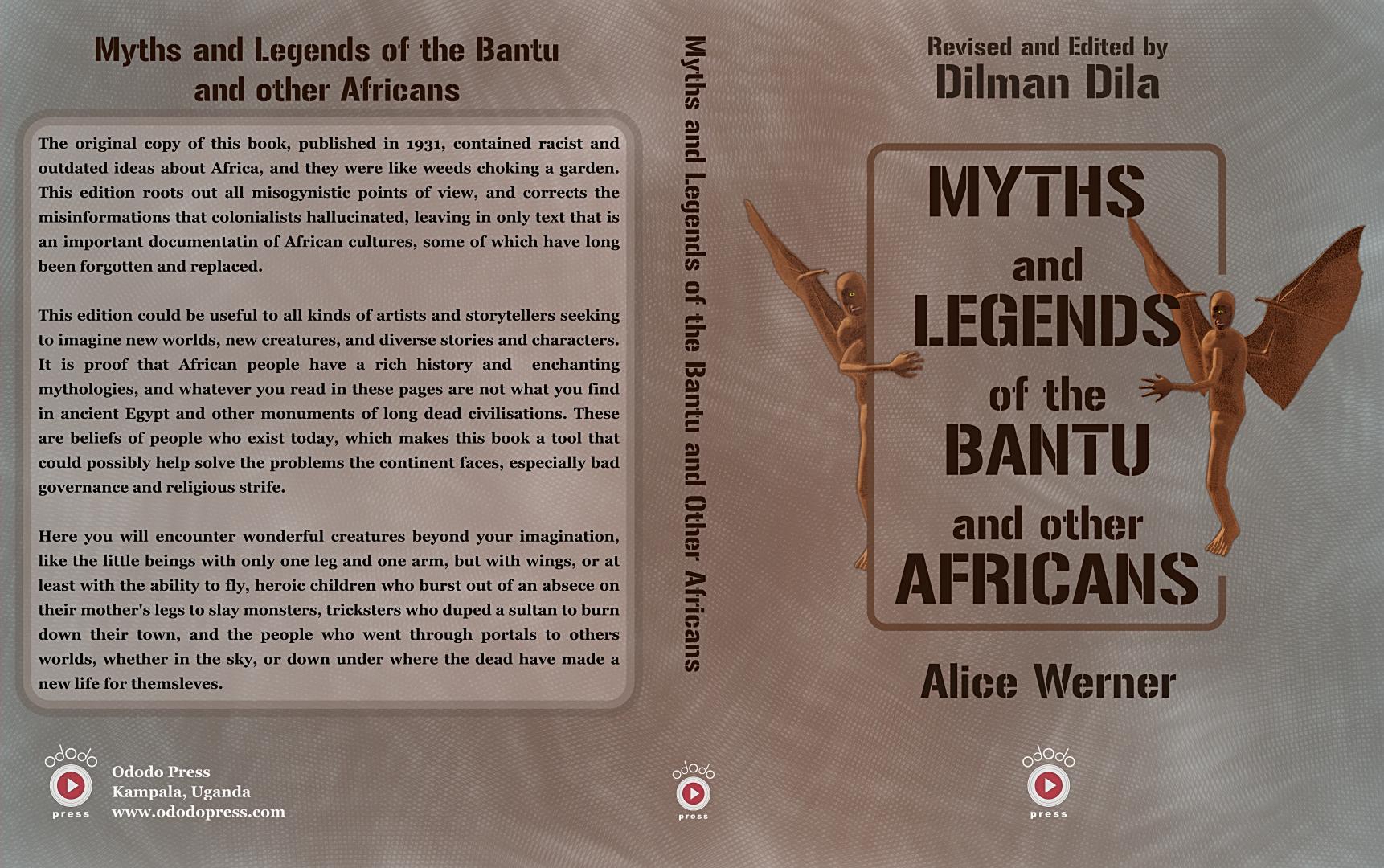
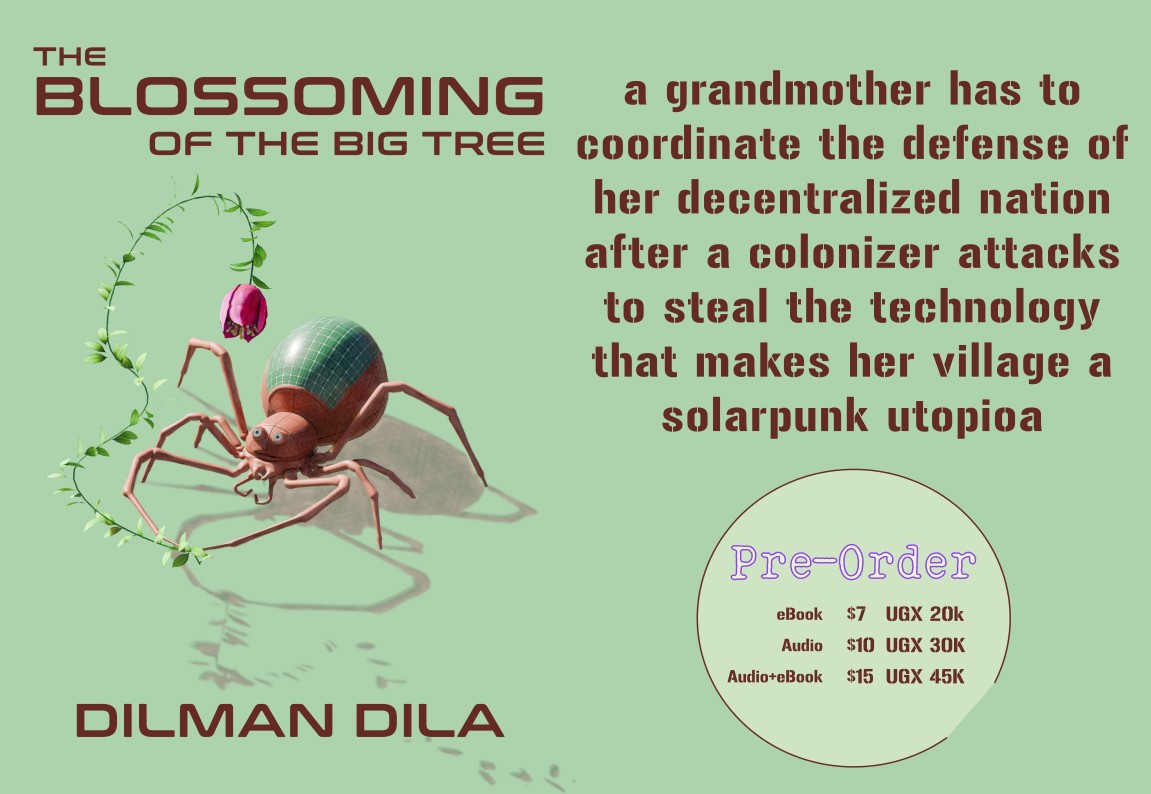
So well, you can support this venture by buying our books. At the moment, one novella is out on pre-order, The Blossoming of the Big Tree, a solarpunk story about a woman in her seventies, who is probably autistic and has to organize the defense of her decentralized country when a colonizer attacks. The other book that will come out in the next few weeks is a revised version of Myths and Legends of the Bantu, for I love folklore and this book is a treasure trove. I had to edit out all the problematic texts since the original writer was a colonialist and racist. Take a look at the cover below and do follow the press to get notified the moment it is out.