When I first visited USA in 2017, movie tourism captivated me. I wanted to see places featured in films that I had enjoyed. I don’t like ‘touristy things’, and so this was a good excuse to walk around, and it showed me things that I never would have learned from the main tourist attractions. Like, in New Orleans, I visited the street featured in Van Damme’s film, Hard Target (1993), and discovered a great restaurant where I had the best food I ever ate in the USA.
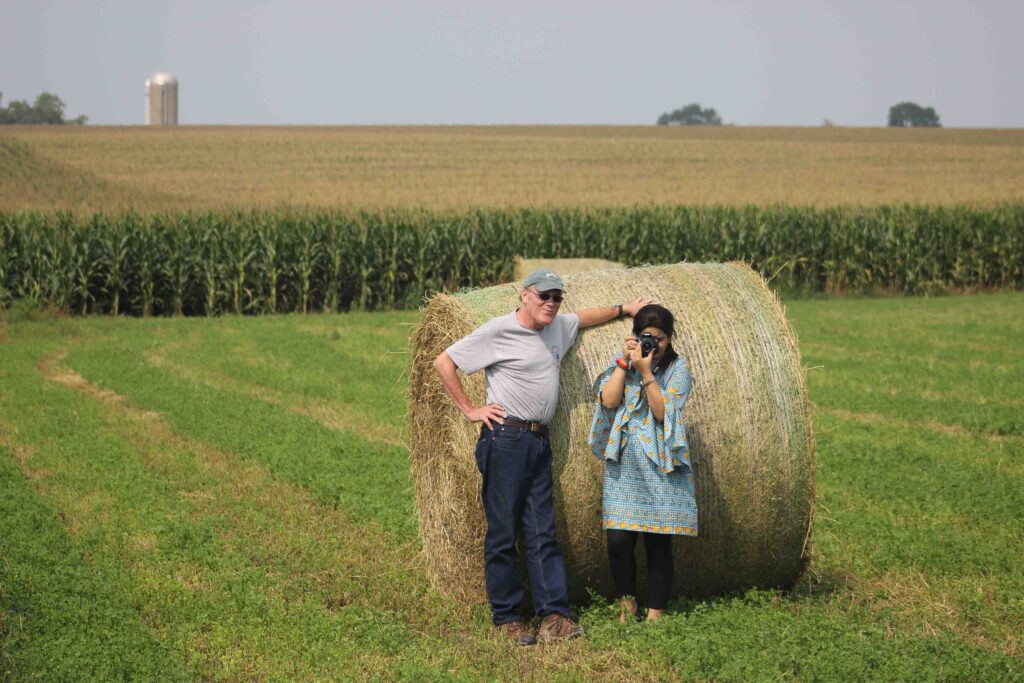
I was a fellow at the University of Iowa, International Writers Program, so naturally the first place for my movie-tourism adventure was The Field of Dreams (1989), where I learned that farm toys were very popular in rural US, that children crave for them more than for Spiderman. Or so I was told. A kind guy, Chuck, upon learning of my desire, offered to show me movie places close to Iowa, and he told me this toy story (pun intended!). The farm store I visited was full of farm toys, trucks, tractors, harvesters, machines of various kinds and sizes, all waiting to make some kid happy. I never thought this was true of the US. In the movies, every child (boys, I should say, for Hollywood promotes a certain culture) loves action heroes. But then, entertainment corps own the superheroes so they market it, while farm toys belong to (John Deer?) so you won’t find Batman in a farm shop. Yeah? I learned another tidbit. There are two kinds of farm tools, those painted red and those painted green, from two rival companies. I hear farmers are loyal either to one or the other, and they’ll laugh at those who don’t use their kind.
Stay connected to this blog for interesting articles like this one. Subscribe via RSS or find me on Mastodon or perhaps follow via email.
As I started this adventure, I thought of writing a film or romance novella where two characters re-enact the scenes set in the places where the films were shot, something like they did in The Dreamers (2003). So in my idea, the a person visits the location of The Field of Dreams (1989), and a ghost from their past walks out of the corn, someone they thought was dead. A romance blossoms, when they visit The Bridges of Madison County (1995) (It wasn’t a memorable visit for me, though cute) and then they have a baby, and as they embark on a train trip at the Union Station in Chicago, going up the steep steps with the baby in a pram, well, trigger happy agents from The Untouchables (1987) shoot at criminals. Uhm, you get the drift? Perhaps someone should steal this idea and make the film as homage to Hollywood cinema.
In New York, I stayed at a hotel near the Times Square, which was a unique experience. I hated the hordes of tourists but related with the street entertainers looking for a buck, street poets who charged $10, painters who drew portraits as a performance. Times Square features in many movies, but it did not hold my interest and I only passed by on my way to and from the hotel.
The Ghost Busters fire station disappointed me, since it was under renovation. I’m not a fan. When I first saw that movie around 2015, I never understood what the fuss was all about. It’s just that the idea of visiting a fire station fascinated me. I’ve never been to one so I went with some kind of excitement, but I couldn’t find it. I walked around, constantly checking my map, and it wasn’t there. Puzzled, I saw a woman whose hair was bleached white stepping out of the bar opposite the target building, and I asked her ‘What’s this plot?’ and she says ‘16 N Moore, and I say, ‘Is that 14 N Moore?’ and she isn’t sure, and I say ‘Isn’t that supposed to be a fire station?’ and she says, ‘Oh, you are looking for the Ghostbuster fire station?’ and I laugh in embarrassment. She says, ‘They are renovating it, not sure when it will be done, not sure if they will tear it down or keep the original facade.’ It was a disappointment because it looked like an ordinary building, and I was a little pissed off that I had endure rain to get there, and then not even get inside.
After the Ghostbuster place, I wanted to see the sites from the Annie Hall (1977) film, and to get there, I had to go to Christopher St Station. I rode the train everywhere in New York. It was a nice way to get around the city, and trains fascinate me, but I had trouble buying tickets. A lot of the ticket booths were closed, and I’d walk a block or two or even three trying to find a place to buy tickets. The system was not kind to visitors, they sort of expected everyone to know how to and where to go to get a ticket. So frustrating. Same thing happened in Amsterdam, I would stand at the station totally lost, unsure how to go about getting one. That day, I don’t remember which station I was at at that time, but I stood there, very lost, thinking I won’t be able to get to Christopher St Station, and then a black girl, perhaps a teenager, came off a train. She looked at me, and perhaps understood my dilemma. She asked, “You want to go?” and before I responded, she swiped her card and the gate opened and she smiled as she skipped away, not waiting for a thank you. I got a free ride.
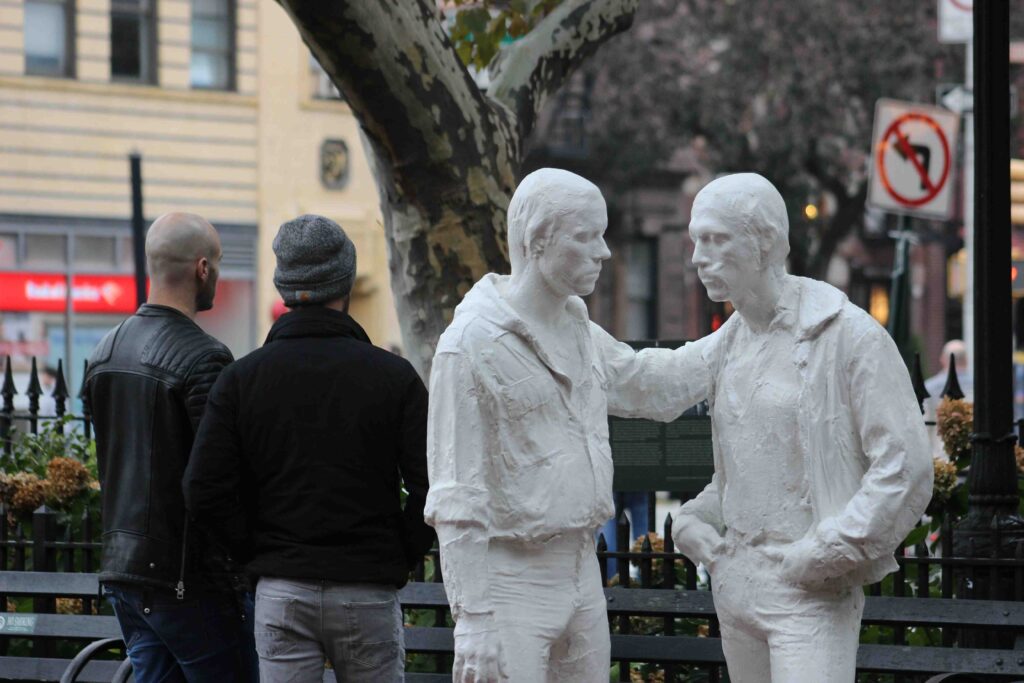
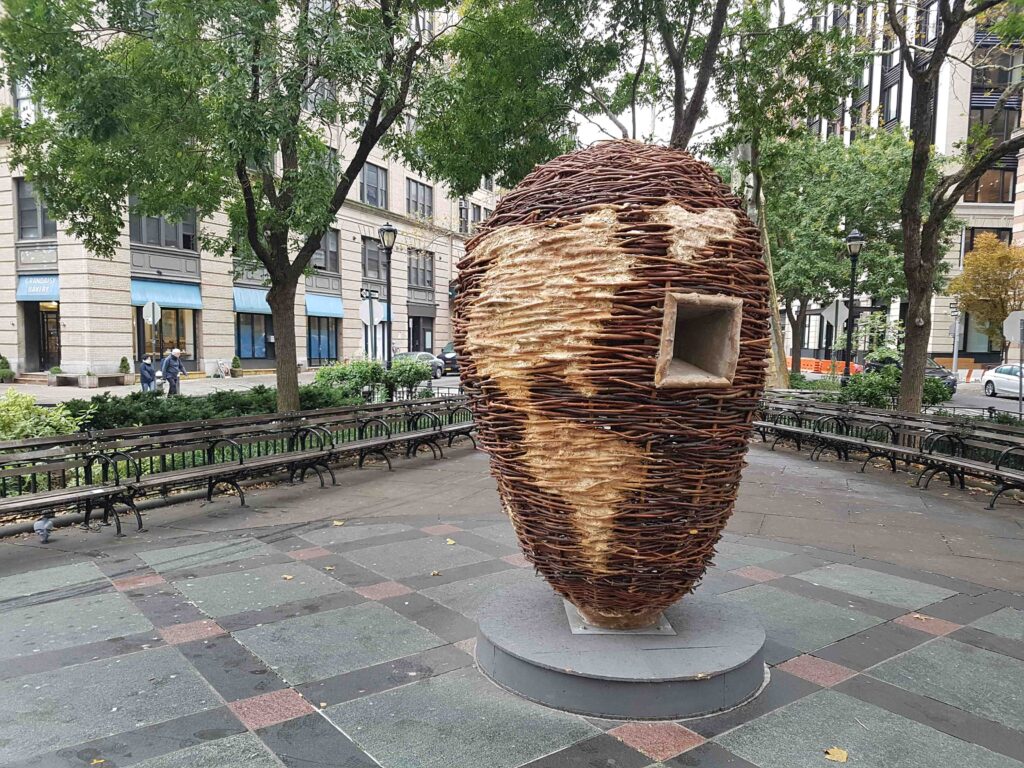
So I got off at the last station and followed the map to the first Annie Hall spot, on 9th Greenwhich Ave. I was always on the lookout for street art. I found this weird looking piece as I went to the ghostbuster firestation, and now after getting off this station, I saw it again, and I wondered if it had something to do with trains? But also, right in front of the station was a park, Christopher Park, and I saw statues, so I picked interest.
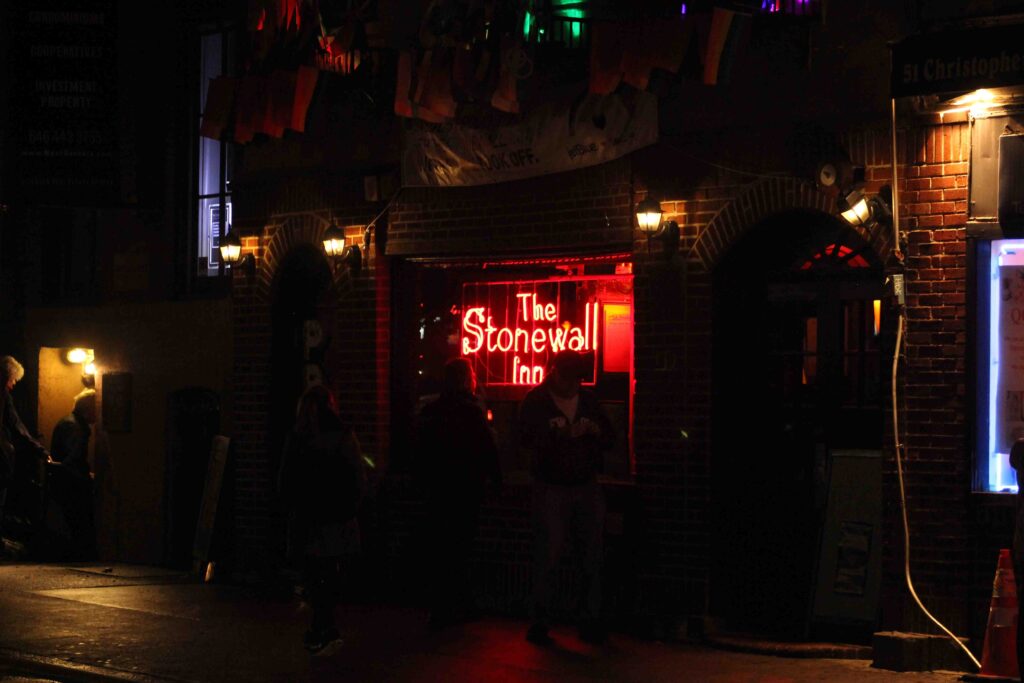
That is how I discovered Stonewall.
I read the plaques in the park, caught up with what happened, and thought I’d peek into the bar and see what it’s like in there. As I walked in, two young people, a man and a woman, were at the doorway, deciding whether to get in. The man said, “It looks like the kind of place you go in to get wasted. Doesn’t look like there are seats. Looks like its only standing room.” And the lady said something in agreement, and they walked away. I think they were on a date. Inside, it was full, all the bar stools were taken, and the few tables were pressed against the walls full. The hum of conversation competed with the music, and there was a pool table in the middle, low lights creating an ambiance, very filmic. I came back later, after visiting 9th Greenwhich Ave, for I wanted to experience this iconic bar, though I’m not much of a clubbing person. I found an empty seat next to an elderly white guy and I ordered a drink. I overheard him tell the barman that he was bored. I think he knew all the people who worked there. I tried to engage him in conversation, about the bar, about its history, and at first he was enthusiastic, but when he asked if I lived nearby, and I told him, “Oh, I come from Uganda,” his smile faded away. “There’s a barman who has worked here since 1977,” he said, and turned his back to me. I think he lost interest when he realized I was a tourist. I finished my drink and went out.
Anyway, after learning about Stonewall, I continued to ‘the Annie Hall street’, which is how I thought about it. Unlike other sites, I had to use scoutingny.com to discover it, and they said Alvy and Annie kissed in front of a clothing shop, on 9 Greenwhich Ave, and I wanted to see the spot. It’s still a clothing shop, even when I visited. I found two ladies attending, and I asked them if they knew anything about the movie. They did not, and they were pleasantly surprised. They wondered if the owner knew. One said that when the owner bought the store, it was a ‘junkyard’.
I had reached the place and there was nothing much else to do, other than take a selfie, but that of course wasn’t the reason for the trip. It was to see New York, and discover things like Stonewall, and The Praline Connection, and the weird art parks (a plaque stated that NYC Parks has been showing public art in the city since 1967). I would have never have learned about these if I went only to touristy sites.
It was a rainy day, very bad weather, and I was hungry, so I went next door to Niu for lunch. I saw they had fried rice and I ordered that. It had arty décor, low lights, and skeletons (left over from halloween?) I asked for wi-fi, and the waiter said it was not for public. I told him I was a visitor to the US, and I needed help checking my next destination. I could not access google maps offline (I didn’t know about openstreet maps at that time, it would have saved me a whole lot of hassle.) He said “No” a little rudely, and walked away. I thought about going somewhere where they could give me free wi-fi to eat, but I was really hungry, and I didn’t know how long I would walk to get the next restaurant, and I thought I’d go back to the train station for wi-fi, since I had discovered free wifi there. So I ate.
Then, the bill came. It was a surprise. I thought it would be around $21, but it was $28:31 and I was not amused. I think they added tax. Well, I enjoyed the food, one of the few places in the US that I enjoyed the meal, and I had wanted to give them a tip, but this surprise bill, and them refusing to let me use their wifi, made me decide not to tip.
I got up to leave. I paused at the doorway, glad that the rain had relented, and I checked my offline map to try and figure out the direction to Washington Square (another Annie Hall location) without a GPS guide. Then one waiter (the man, not the woman) came to me and he was upset that I had not given a tip. He kept saying, “You paid only for what you ate? Where is the tip?” The only other place I had been hassled for a tip was at a Gentleman’s club in New Orleans. “Is tipping compulsory?” I told him. “I’m a visitor. In our country, we tip only when we are happy with the service.” And he said, “Never mind” and walked away. Yes, tipping was the thing that really pissed me off in the US. I never got my head around it. They say that’s how they make their wages, but why not just include it in the bill? Why not force the restaurant owners to pay them a decent salary so they don’t have to depend on tipping?
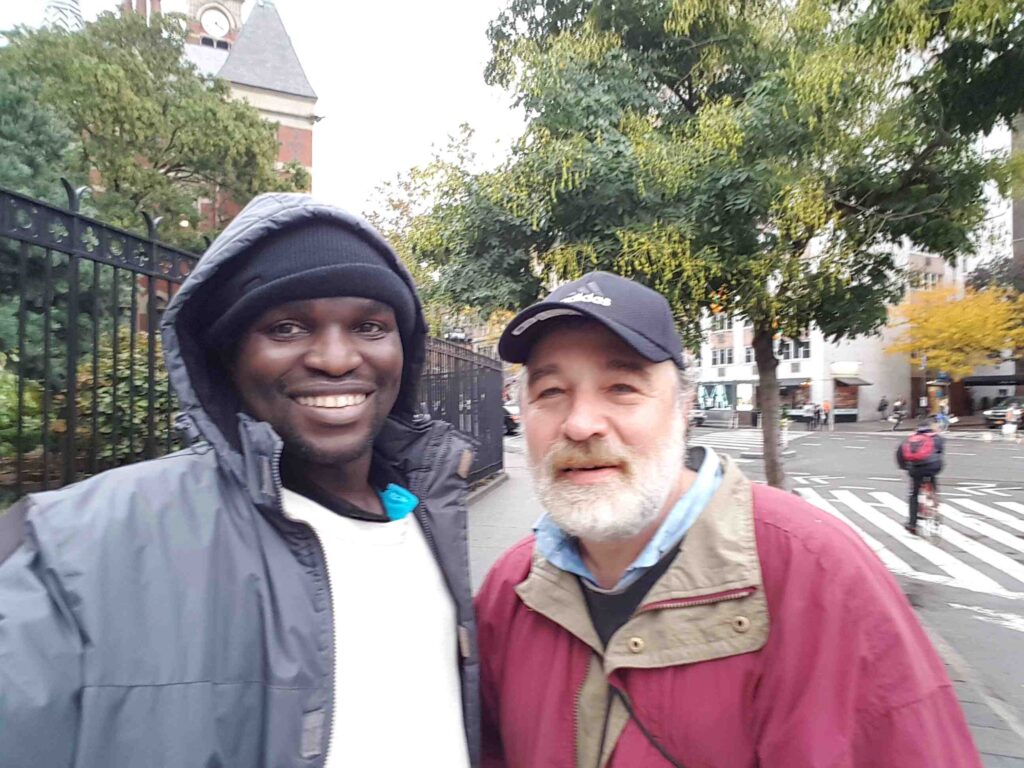
As I walked away, at the corner where Christopher Street and 6th Avenue meet, I was taking pictures of old houses when I heard someone say, “Those are really old houses.” I turned and see an elderly man, all white beards, a big smile on his face. We started talking, and he rattled off about the architecture, “That is old, that is old, that one is new. I like the old ones better.” And he said, “You see that thing on the roof, it was inspired by the bible. The ten commandments.” I took out my telephoto lense and zoomed in, and I showed him, “This?” And he said “Yes, they are inspired by the tablets on which were written the ten commandments.” Then he said on this same building there used to be square water tanks, and he said something about the law requiring them to add balconies so that the fire people can get out of a building. Then he showed me another tank on a roof, it was circular, and said that one was also inspired by the bible and Christianity. “It is open, to let in the light.” Impressed, I ask him how long he had been here, for he had an accent that I did not take as American.
He told me he is called Mr. Leon (that’s the name I caught) and he was Russian. He moved to Jerusalem at the age of 14, in 1981, and then to New York in 1985. He still had a heavy accent. He could tell I’m not American, that I’m African, from my skin color (that Africans look different from African Americans?) and from my accent. I asked if he had heard about Uganda, and he said, “Yes, Kilimanjaro!” That is in Tanzania. “It is close,” he said, “Hemingway wrote about Kilimanjaro. There is Uganda, Kenya, Tanzania, yes?”
We talked a bit about Hemingway, and he asked what I did for a living. When I told him I make films, he said, “Like cultural films? Documentaries?” I know, stereotyping. I said, “No, science fiction and such stuff.” He laughed in embarrassment, and then he showed me two books that he had just bought, the ‘Theory of Film’ and ‘European Cinema’. Intrigued, I asked if he was a student or a professor, but no, he just liked to study film. He ‘invented’ a screenplay once. He used that word, ‘invented’. I was even more curious, and he added that he wrote a ballet piece as well. He described the ballet dance, which starts in a theater, the dancers point at the different paintings, and the audience guesses what it might mean. Or was it that they told the audience the meaning? Or was it that the dance revealed the meaning of the paintings to the audience? In the end, the musicians usher the audience out of the gallery into the street, and the play continues. He wrote the piece, someone else directed it.
His screenplay was about terrorists. For a moment I thought he would talk of suicide bombers and such, but they try to poison beer with cyanide, because everyone likes drinking, and it’s a good way to kill everyone. I tried to press him for details. How do they do it? Do they sneak into a brewery? Or into a bar somewhere? He laughed, and he became eager to continue his journey. He was not sure if this script was ever made into a film, he ‘invented’ it and gave it to someone. We bade farewell to each other, and that was the most interesting street encounter I had in all my time in the US.
When I got back to Christopher St Station, as I waited for the train, I was taking photos. Then I heard a woman screaming from the other side. She thought I was taking her photo. She was too far away, and the images too blurry to even recognize her, but she did not know this. She just saw a camera pointing at her direction and she was really pissed off. She first gave me the finger, and when I kept snapping, she shouted ‘I don’t give you permission to take my pictures, you fucking jerk off.’ I laughed, and she was even more pissed. I waved at her, and the train saved the day by coming between us.
Oh, a small reminder that I regularly make science fiction short films and I’m looking for support. It’s very difficult to make it as a filmmaker in Africa, especially when you want to make films about the future, for there is virtually no market to encourage such investments. So any dollar you can spare will go a long way into changing things. Pledge on patreon.com/dilstories where you only pay after I make the film, and you can stop payments at anytime. The pledges encourage me to create! You can also donate via PayPal. For details, please go here dilmandila.com/donate