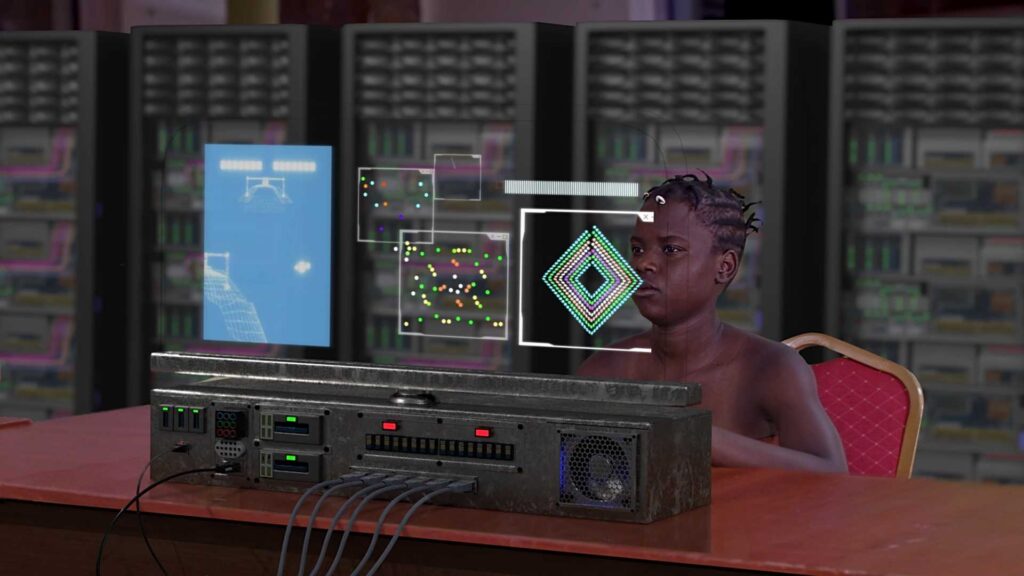
Last month I screened two of my short films in an underground event in Kampala, organized by a book club, and after the show, someone said to me “You are a prophet.” She was referring to Akoota (2019), a film set in the near future, and speculates on what might happen if biotech firms funded by the US Army and Bill Gates succeed with perfecting gene-editing technologies. I wrote about it in this article, The Politics of Malaria. Then today, I took a break from editing The Night Dancer to catch up on the revolution in Nepal, a country I lived in for two years and I learned to speak Nepali. They ousted an authoritarian leadership, and elected their first female prime minister using social media. And I have to ask, Am I a prophet? I did not predict that this will happen in Nepal, but I’ve written stories (like this and this) set in the near future where revolutions replace dictatorships with a direct democracy in a decentralized country, and where every citizen is a parliamentarian and they run the country using an app modeled on social media. Is that what just happened in Nepal?
Nope. I won’t put ‘prophet’ in my bio. In creating art themed on the future, the goal is not to predict what will happen. Akoota (pronounced ah-ko-ra) is an Acholi word that roughly translates to ‘divination’, derived from lakoota, a kind of diviner. I named the film as such for lack of a single word for ‘future’. The closest is a phrase, kare ma bino, the coming times, which does not sound arty. Like a diviner, I was not predicting what will happen, but imagining one of the tomorrows we might find ourselves in if we don’t pay attention to gene-editing technology, especially with since profit minded capitalists and the US military are funding the research.
Octavia Butler is considered a prophet, for she wrote many science fiction novels that are prophetic. Some think she predicted Trump’s election and the California wildfires in The Parable of the Sower. She had a few rules for predicting the future, and the golden one is “look around at the problems we’re neglecting now and give them about 30 years to grow into full-fledged disasters.” But she was clear that this was not simply to mourn as if there was no solution. She added that “the very act of trying to look ahead to discern possibilities and offer warnings is in itself an act of hope.” That’s what I try to do when I write about the future.
I sometimes call myself a social activist, sometimes, though I never go into the streets waving a placard. I understood very early on that stories, and art, have the power to change minds, to influence society, and so I make a conscious effort when creating them. Of recent, I’ve become concerned with decolonisation, for Africa’s biggest problem is the enslaved mind. The education system makes us believe that there was nothing on the continent before The Berlin Conference. I write to re-imagine the past. Some call it Afrofuturism, or Africanfuturism, but I think it’s all about how our cultures interpret science and technology, and how we can leverage our egalitarian point of view to build a better world. In researching the past, I came to understand what kind of governance we had back then, and I fussed about how present day technologies can help us get rid of dictatorships and capitalism, in favour of a world without hierarchies and social inequality. No, it’s not in a return-to-nativism kind of way, but the past can offer us an alternative to capitalism, to Western democracy and to the Western idea of a state. That research influenced my stories, and now what is happening in Nepal validates my imagination. The future I envision is possible.
Next month, after I finish The Night Dancer, I’ll embark on my next short film, a solarpunk comedy about a decentralized country where tens of thousands of ordinary people are co-presidents and they manage the country using a social-media kind of platform. It will be the last film I make as target practice before I tackle a feature film, title Big Tree. While the solarpunk comedy happens at a time when such a county has been established, Big Tree will be set in the present and is about the young woman who invents the technology that will make direct democracy possible. Follow me on Mastodon, or my PeerTube channel, or follow this blog by email or via RSS for updates on these projects.
- The trouble with Afrofuturism
- The Great Science in African Divination Systems is not Science Fiction
- Is Science Fiction Really Alien to Africa?
Before colonialism, many Africans and other indigenous people did not have centralized governments. Just look at any map showing kingdoms in Africa before 1890 and you will see a lot of huge blank spaces. The white man used this as proof of primitivism, for they had this stupid thing where they equated civilisation to authoritarian rule. Yeah, really stupid, stupid thing. I’m always disgusted by Afrofuturists who promote royalty as a counter narrative to slavery, for they inadvertently repeat the lies of the coloniser, that authoritarian rule is civilisation. (You can’t vote a king out, however good they are!) I wrote an article, titled A Vision for Direct Democracy in Yat Madit, which talks in detail about that pre-colonial world and how it functioned. This being a blog, I’m trying to keep it very short. Oh, you can also read academic works by Ndangwa Noyoo and J. J. Oloya to get a better understanding of decentralized governance.
I believe that sooner or later we shall witness a collapse of centralized leadership, along with capitalism, and this is based on my observations of recent social revolutions. It started with the Arab Spring in 2011 (okay, someone fact-check me, perhaps something similar happened before 2011?) and there have been plenty of other times when social media influenced national, and even global politics, like #EndSARS and #MeToo. More recently, there was hope in Sudan, and then there is the Gen Z movements in Kenya, which forced the government to change it policies, and in Asia, which toppled governments in Sri Lanka and Bangladesh.
The problem is that these revolutions always end with the military stepping in, and it becomes a case of nothing changing. That happened in Egypt, and it left Libya and Syria in ruins, and it is happening in Sudan. Will Nepal keep it’s revolution? In Taiwan, after the Sunflower Student Movement, Carl Miller writes that “In the wake of the movement, an experiment began. It was
an attempt to better unite parliament and crowd, changing how government listens to its citizens, and makes decisions. An attempt to reinvent democracy itself.” I was particularly inspired by the solution, vTaiwan, with one of its many tools being “Pol.is, a digital platform for opinion collection, to facilitate large-scale conversations and consensus building.” Perhaps Nepali can borrow something similar and ensure they don’t lose their grip on people power?
But I’m sceptical. The big problem is a lack of an ideology to give these movements a sustainable end. The masses take power, but then, they resort to the same systems, to the same ideologies, to the same infrastructure that led to inequality in the first place. Nepali people used Discord to choose their interim prime minister, which is a first, and perhaps after elections they will have new leaders, good leaders. Maybe there will be ten years of good governance, perhaps fifty. But as long as there is centralism with a few people making decisions, as long as we maintain a colonialist view of governance, their will always be the risk of things falling apart again.
I recently heard about happenings in Mexico, where communities are decolonizing power, they are rejecting political parties and career politicians and returning to indigenous collective governance, and it strengthens my hope. I don’t know whether direct democracy as I imagine them in my stories is feasible in a country with millions, even billions, of citizens, but I know that the first step is to change the narrative on what it means to govern. I hope my stories can help people see that it is possible to live without a centralized leadership, and certainly, since I joined the fediverse, this idea has taken wings.
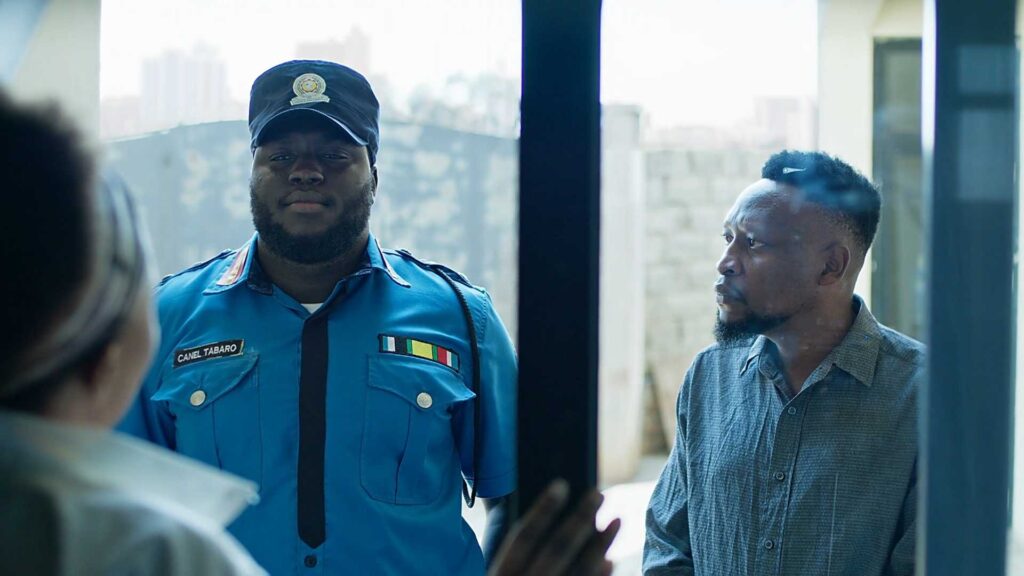
In this future, the app that runs the government does not sit on a central server, and is not controlled by a single individual or entity. Instead, every home has its own server, and every village is a state in a federation, for it is easier to take part in the politics and the village, ensuring the village works and gives everyone the good life, than trying to do it at ‘country-wide’ scale. Village here isn’t limited to only rural administrative units, but is the smallest administrative unit in Uganda. It’s a utopian future, and I hope you can enjoy it once I bring it to life in my next films.
~~
So, I need a small favor. I regularly make science fiction short films and I’m looking for your support. It’s very difficult to make it as a filmmaker in Africa, especially when the films talk about the future, for there is virtually no market to encourage big film investments, and so any dollar you can spare will go a long way into changing things. Please pledge on patreon.com/dilstories You only pay after I make the film, and you can stop payments at anytime. For other options, like donating via mobile money or PayPal, please go here dilmandila.com/donate