I never gave solarpunk much thought until it kept showing up on my timeline, so I took a keener interest and had a eureka moment. A lot of my stories fit the genre! It envisions a near future where humans and their cultures co-exist with nature in a sustainable manner; a future without social hierarchies and injustice and inequality, where technologies exist to make villages (the smallest human settlement larger than a homestead) largely self-sufficient, without capitalism, with renewable energies powering our lives and egalitarianism and heterarchy dominating our ideology. My emphasis is on near future for solarpunk is activism, which is what I try to do in my recent stories, like this film.
I need your support to make the film, so please donate if you can, or share with your networks. PayPal is preferred for one offs, or pledge continuous support through Patreon, Ko-Fi, or LiberaPay. Follow me by e-mail or via RSS or on Mastodon for progress on these projects.
Daily Update: 2,460/2,750 (3 days left).
Note: If the PayPal campaign widget below
appears broken please use this direct link.
I don’t care much for labels. Some writers insist on identifying their work the right way. Nnedi Okorafor insists she writes Africanfuturism, and not Afrofuturism. The distinction is important for one revolves around the African-American experience while the other centers on realities within Africa. I have issues with both labels, but I don’t mind them. Bill, the publisher of my second collection of short stories, Where Rivers Go To Die, branded my book Afrofuturism. He asked for my opinion and I told him, “Slap whatever tag you want onto the title, if helps sell the book.” The system we are trapped in demands labels, and to some extent you have to play the game. According to Nnedi’s strict defination, Where Rivers Go To Die is pure Africanfuturism. All its stories are centered in cultures I grew up in, Luo and Bantu within East Africa, and in most cases I don’t bother to explain culturally specific stuff to the reader (though I provide enough context so things are not too confusing).
Interesting to note, in 2015 during the Ake Book Festival, I was on a panel discussion with Nnedi, in which I advocated for categorizing African speculative fiction differently, and Nedi asked something like, “Do we really need labels?” I replied with something along the lines of, “Well, if a reader walks into a bookshop and wants sci-fi books, and the works of little known Dilman are beside that of Stephen King, chances are that the reader will pick the book of the famous guy. So labels help the reader searching for a particular kind of book.” A few years later, Nnedi coined Africanfuturism and is very strict on what her writing should be called, yet I’m here putting whatever label helps market my books – uhm – yeah, I know how that sounds, but you get the gist of it? Once I’m famous I’ll insist my works should be called jokpunk, and nothing else! (I’ll tell you what jokpunk is someday soon.)
Read: Is Science Fiction Really Alien To Africa?
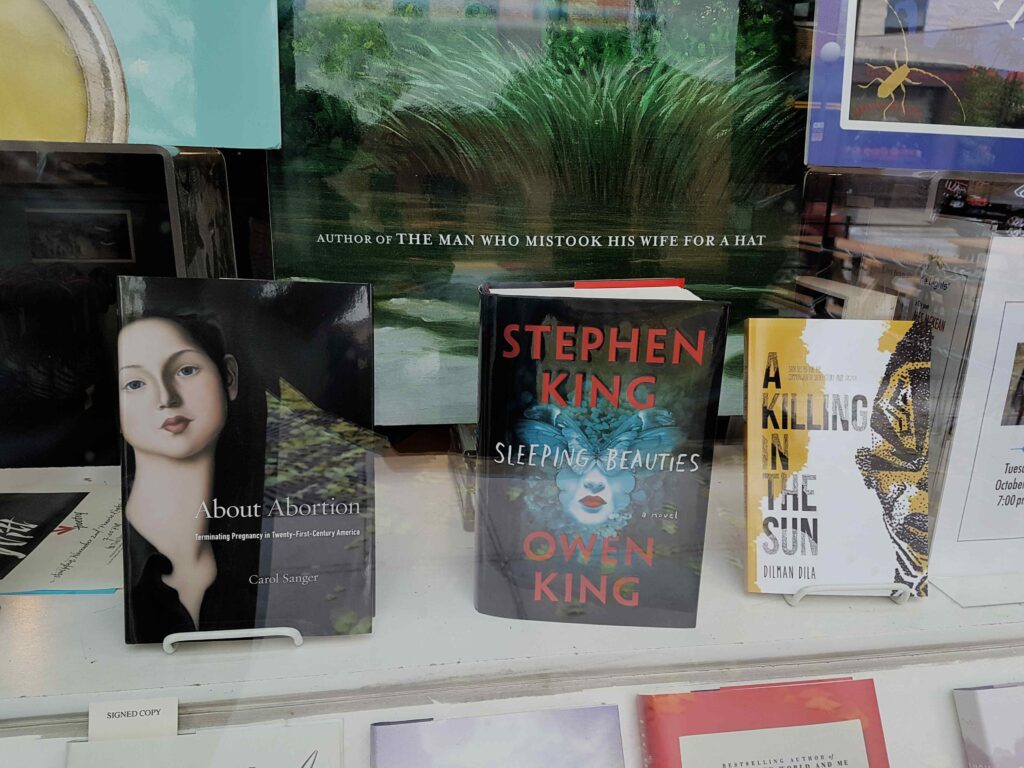
I still don’t like Afrofuturism. It centers the West in African stories, and it doesn’t do much to counter ideas that led to colonialism, slavery, and capitalism. Look at Black Panther. I hate that film. It preaches capitalism. Wakanda was never colonized, yet its cities look like European cities, complete with carbon-emission characteristics? And why does Vibranium give whoever controls it all that power? Wakanda’s obsession with royalty perhaps stems from the African-American saying, ‘We Were Kings and Queens’ as a counter to racism, but it instead enhances negative stereotypes since colonialists equated civilization with despotic monarchs, implying that people without royalty are primitive.
When you look at the map of pre-colonial Africa showing great ancient kingdoms, you find huge blank spaces because the vast majority of African peoples had various forms of decentralized governance. Even what the colonialist thought was centralized never had power in one individual or place. In the example of Buganda, each kabaka (loosely translates to king) set up their capital in a different place from that of their predecessor, ensuring power shifted with each reign. So me telling stories like Yat Madit is an attempt to decolonize governance.
But when an American publisher puts ‘Afrofuturism’ on my book, well, I don’t mind because they have to sell. Perhaps some readers get disappointed when they expect variations of Wakanda, and instead find stories about people farting fire. Africanfuturism, is growing in momentum, but a lot of the stories play safe, dancing around the same ideas that dominate mainstream science fiction. Tlotlo’s Womb City is a depressing dystopia, cyberpunk-ish, with capitalism taking away people’s rights over their own bodies. Wole’s Shigidi takes capitalism to the spirit world with the Orisha Spirit Company, and the story revolves around two gods trying to leave the company and live on their own terms. Suyi’s Lost Ark Dreaming has the kind of class divisions you find in Snowpiercer, or Silo (the TV series). All these examples are good books that have recently garnered attention, and they hint at the direction Africanfuturism is taking. Some works are of course closer to solarpunk, like the Sauuti and Tade’s Rosewater, I think, but a lot of what I see are not.
The worlds I create lean toward egalitarianism and heterarchical governance, and imagine life without capitalism. The stories I wrote for Kampala Yenkya, and The Future God of Love is perhaps the most solarpunk of them all, with technology that is almost steampunk, with settlements (towns, villages) that are largely self-sufficient and under leadership of a rwot, a kind of leader in a peer-to-peer world, for lack of a better definition. There are no police or big armies and no powerful emperors. It is of course heavily inspired by settlements in pre-colonial Acholi, where I borrow a lot of stuff for my stories. I studied their system of governance and it made me wonder if that kind of direct democracy is possible in the present day, given the digital technologies we have, and this led me to stories like Yat Madit and The Grey Girl. Well, my imagination is validated with recent events in Nepal, where protests led to the election of a prime minister via discord!
When a lot of people think about pre-colonial African communities they don’t think of science and technology, and so when they read The Future God of Love they ask, is this set in the past, or the future? The only kind of technology we know are a product of Western knowledge systems, which traces its roots to the Middle-East, and ancient Greece and ancient Egypt. Other knowledge systems are ignored. But scholars like Ron Eglash inspire me, when they say that binary code is rooted in a divination system that is common all over Africa, and when he uses mathematics theory like deterministic chaos to describe divination. Ah, divination. Which some people consider gibberish and put it in the same category as stories of food falling out of sky to feed starving people in the desert. Eglash’s writing validated my imagination, and I was free to dream of technologies that are somewhat steampunk, that look low-tech yet are futuristic, things that anyone anywhere, not only those with university degrees and access to expensive laboratories, can produce.
Where people see rain makers, I see cloud-seeding technology. Where people see spiritual healers, I see surgeons carrying out the caesarean-section before European doctors even thought about it. Of course the racists, when they heard of such surgeons in the 1800s of what is now Uganda, they concluded the knowledge somehow came from ancient Egypt (now they say aliens built the pyramids). I see portals and spaceships in folk tales about people journeying to the stars, and I think such technologies can help every community to be largely self-sufficient.
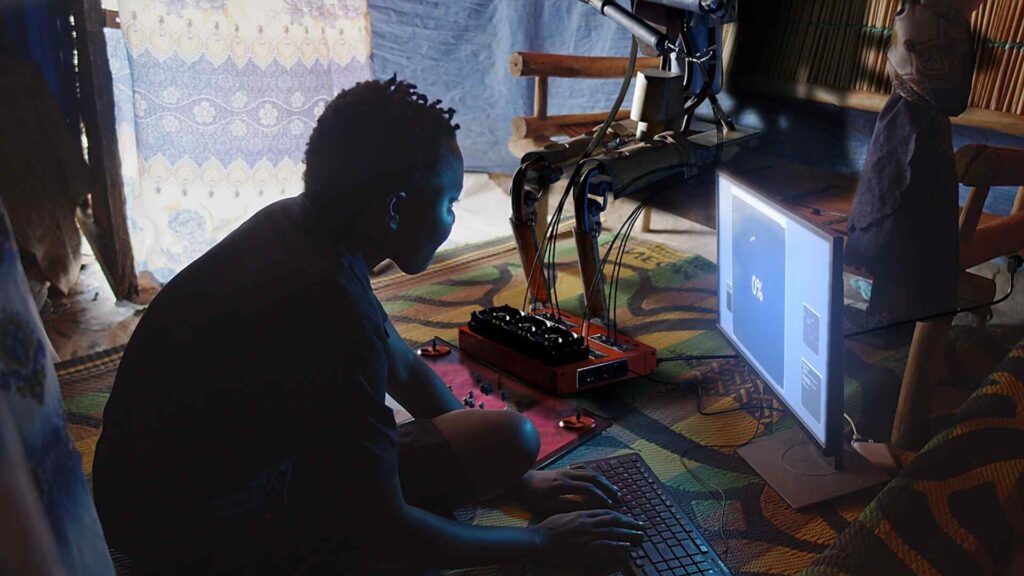
Both afrofuturism and Africanfuturism are similar to solarpunk, for to be solarpunk is to mount a resistance to the mainstream. The two futurisms were a reaction to how African peoples were portrayed in science fiction, and how African histories and futures are perceived due to colonialism and slavery. My works will always belong to these genres for I’m from East Africa and I use aspects of the cultures I grew up in. But I’ll happily slap on the solarpunk label for its a genre that neatly describes what I create. I’m solarpunk, even without trying too hard to be.
A couple of years ago, I participated in creating a card game, called Kampala Yenkya. They asked me to write stories to help in the worldbuilding, and, it being focused a climate project, my first thought was of dystopia. The people I was collaborating with then insisted I make the future more hopeful. I thought it a bad idea, that is spoke of human arrogance; “let’s break it, we’ll fix it.” Then I came upon Octavia Butler’s advice on writing about the future, where she said, “the very act of trying to look ahead to discern possibilities and offer warnings is in itself an act of hope.” That set off a train of thoughts that led me to embrace solarpunk. Writing dystopia empowers the oppressor, and fascism rises where there is misery and no hope; writing solarpunk gives hope to the oppressed by providing an alternative future to look forward to. Stories like Star Wars and Lord of the Rings are dystopian, and they romanticize dark and despotic leaders, while films like Blade Runner make it seem cool to live in a bleak world, and all these make it easier for ordinary folk to vote for a fascist.
Understanding the genre helps me to refine my creations. My stories like The Blue House are a dystopia set after a climate-apocalypse for I did not have a platform to ground them in. (Perhaps they are solarpunk like Nausicaä of the Valley of the Wind). Embracing solarpunk, however, means that when creating in that genre I have to live by its rules, which I think comes down to totally egalitarian universes where clean energy powers civilization and there is no room for capitalistic greed. Let me illustrate with an anecdote from my early years. I wrote this screenplay that I thought was a bloody horror, it had a monster, it had a person killing other people in a quest to break a curse. Then I got admitted to Maisha Film Lab and met a mentor, Steve Cohen, who read the script and advised me, “No Dilman, this is not a horror. This is a romantic comedy.” I rewrote the script focusing on the comedy, and some of its rules are that nobody dies, and this kind of advice helped me find my footing as a filmmaker. So discovering solarpunk makes me more intentional on the kind of story I want to create.
I’m starting with this short film, which imagines a future without central governments, no politicians, and no military. It is activism, of course, something that disrupts the status quo with the goal of creating social and political change. But I don’t claim the film will change the world. I just want to tell a story that will perhaps spark a conversation somewhere, and perhaps make one or two people think about why we let power reside in the hands of a few. You can support this film with a donation, or sharing the link to your networks.